Examine This Report on How Much Would Single Payer Health Care Cost
Caregivers and clients restore the autonomy to make decisions on what's finest for a patient's health, not what's dictated by the billing department or the bean counters. No denial of coverage due to pre-existing conditions or cancellation of policies for "unreported" minor health problems. One third of every healthcare dollar in California goes for documents, such as rejecting care, and earnings, compared to about 3% under Medicare, a single-payer, universal system. When it was established in 1948, the federal government advised the population that the NHS was not free, and it was not "charity." It was paid for by everybody through taxes. In parliament, Nye Bevan, the Welsh coal miner who was the visionary behind the creation of the NHS, specified the objective to " universalize the finest," to guarantee that this openly funded system provided the greatest requirement of care to everyone.
The NHS has actually ended up being a cherished British institution, admired everywhere from the Olympic opening ceremony to a cake on the Great British Baking Show. When a single-payer, single-provider system works well and is properly funded, requirement is the only requirement for receiving care. That suggests a patient and her household can get care without worrying about preauthorization, payment strategies, surprise costs, or out-of-network specialists.
Providing care on the basis of requirement implies clients might not have the ability to choose where and when they receive elective care and may not, for example, have the ability to ask for additional diagnostic procedures like MRIs to attain assurance. Over the last few years, the NHS has been severely underfunded, resulting in some challenges in accessing care, and overwork and burnout among its staff.
Whether they are amongst the millions of uninsured, including 10s of millions who have actually lost access to employer-sponsored insurance coverage in the present economic downturn, or whether they should browse government-funded Medicare or Medicaid or employment-based insurance, they are caught in a system where mountains of forms and impenetrable eligibility and payment policies stand between clients and their required treatment.
Rebecca Kolins Givan is an associate teacher in the School of Management and Labor Relations at Rutgers, the State University of New Jersey, and the author of "The Challenge to Modification: Reforming Healthcare on the Front Line in the United States and the United Kingdom" (, 2016).
What do Vermont, the bluest of blue states, Colorado, a purple-trending blue state, and Massachusetts, home of an all-blue congressional delegation, share? They have You can find out more actually all stopped working at pursuing single-payer. States are the laboratories of democracy. Yet, single-payer initiatives have actually regularly failed. These experiments show the obstacles that single-payer facesranging from high costs to opposition from core progressive constituencies.
Getting My When Is Health Care Vote To Work
It likewise looks at what increased from the ashes after the efforts stopped working and what policymakers can discover. Vermont, Colorado, and Massachusetts each took a different method toward single-payer, as illustrated in the chart below. 1 In 2011, Vermont State Senator Peter Shumlin ended up being guv having campaigned on single-payer healthcare.
In his very first year in office, Guv Shumlin took the state one action better to single-payer by winning the enactment of legislation to develop the country's very first single-payer system, called Green Mountain Care. His attempts to execute the law covered his very first two terms in workplace (Vermont governors serve two-year terms) throughout which he continued to campaign on single-payer right up to his election to a 3rd term - who is eligible for care within the veterans health administration?.
What were the obstacles and why did they prove stationary? Intensifying costs. The preliminary quote for Green Mountain Care was that it would conserve $1 - how to get free health care. 6 billion over 10 years. Nevertheless, there were still many unknowns, such as what advantages clients would get and their particular cost-sharing requirements. 2 When enacted, Guv Shumlin had until January 2013 to present a funding bundle to state legislators that would pay for the new single-payer health care system.
Nonetheless, the governor pressed ahead without a plan to spend for the legislation. "We can move full speed ahead with what we need without understanding where the cash's coming from," said the Guv's special counsel for health reform. 3 Almost a year later, the Governor revealed he would release a brand-new financing plan after the 2014 elections.
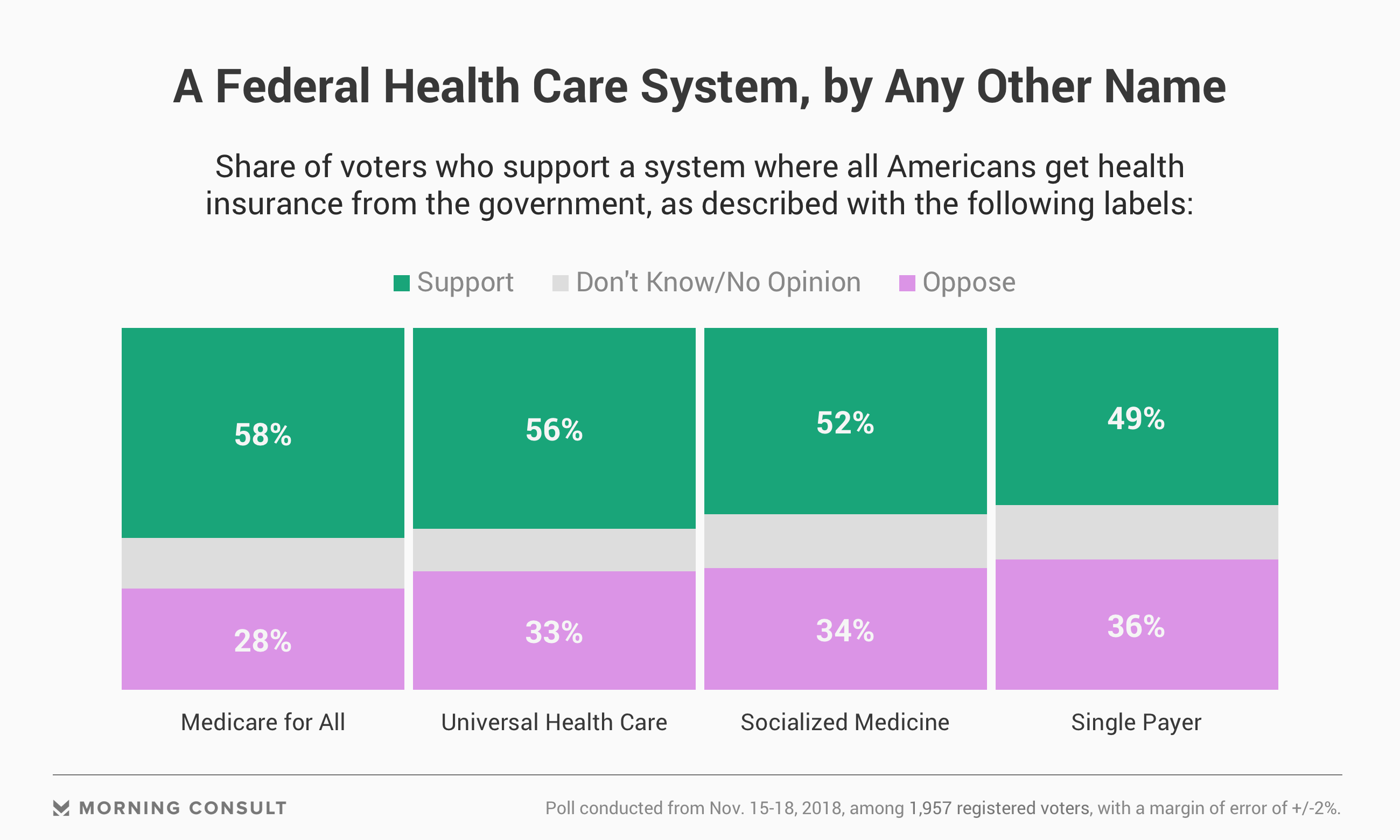
But, the computer designs all showed that the only method to set taxes at rates as low as they desired would be to provide locals skimpier protection that many insured Vermonters already had. "We were pretty surprised at the tax rates we were going to have to charge," Governor Shumlin remembered.
3 billion in its first yearfinanced, in part, by $2. zenwriting.net/regwanl7gs/medical-school-faculty-by-sex-race-ethnicity-and-rank-2018-andquot-in 8 billion in brand-new state tax revenue, or a 151% boost in overall state taxes. 5 Governor Shumlin's team approximated this cost would have swollen to over $5 billion in 2021. For context, the entire budget plan for the state of Vermont was $5.
See This Report about What Would Single Payer Health Care Cost
Officials in the state identified that an 11. 5% state payroll tax and a 9. 5% income tax would be essential to pay for the new health care system. "In a word, massive," is how Governor Shumlin described the tax walkings needed to money single-payer. 6 "As we finished the funding modeling," Shumlin lamented, "it became clear that the danger of economic shock is too expensive to provide a plan I can responsibly support" 7 In spite Visit this website of being a little, progressive state, the government still might not find out a method to make the numbers work.
Union members, community activists, special needs rights advocates, and the Vermont Workers' Center (a group of single-payer fans) all at first rallied to support the legislation. However, the new law released a torrent of lobbying by these companies attempting to ensure the new law benefited their members before the new health care system was set to be carried out in 2017.
Employers wanted protection for out-of-state workers, while little organizations were frightened of huge tax increases (how to start a home health care business). Large businesses pushed back highly on the cost of the new strategy. 8 Self-insured business lobbied versus tax increases, as they frowned at the prospect of being taxed more to help others get protection. These groups also stopped working to inform the public on the compromises a single-payer system would require, including the big tax increases.
9 He likewise accepted think about a grace duration for new taxes on small companies, which would have reduced funding for the program by another $500 million. Still, these decisions made paying for the plan even harder. As a result, a few months before the decision about whether to continue, the Vermont public was divided over single-payer: 40% support, 39% opposed, and 21% unsure.